
Improvisation is a great tool for students to develop problem solving skills. It encourages students to channel what they know into exploring the unknown, the unexpected. When talking about improvisation, the definition that many of us associate with involves inventing notes in the moment. However, the value of improvisation extends far beyond the generation of musical materials. It can serve as an incredible tool for teaching technique, offering a guided but spontaneous exploration of movement in relation to one’s instrument.
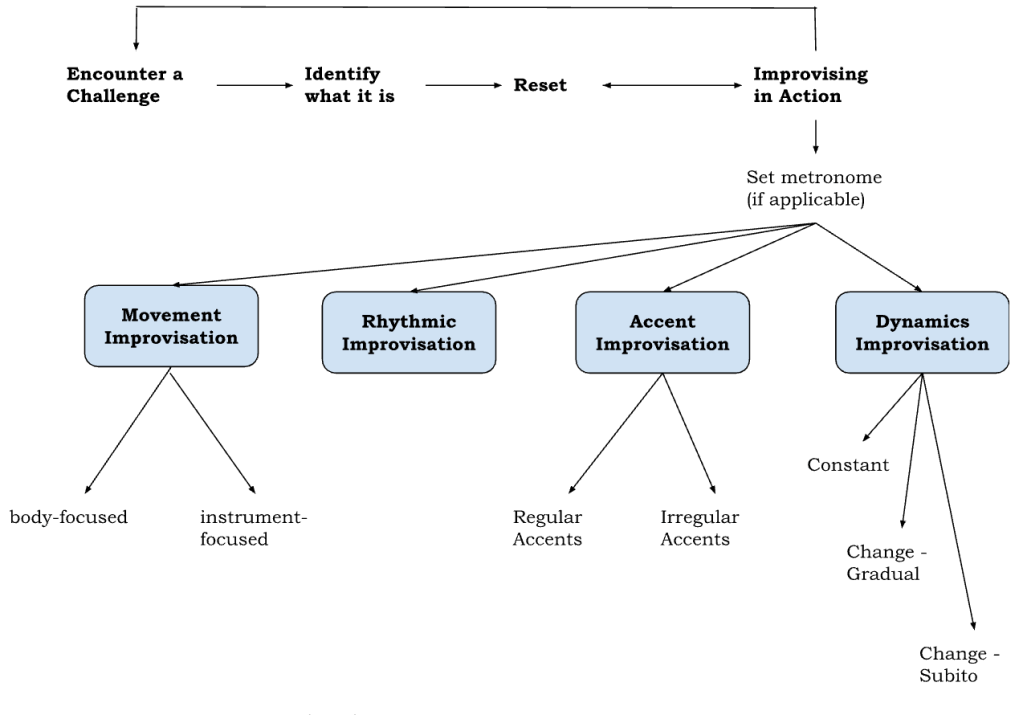
Here are 4 Types of Improvisation To Unlock Students Imagination When They Encounter a Technical Problem:
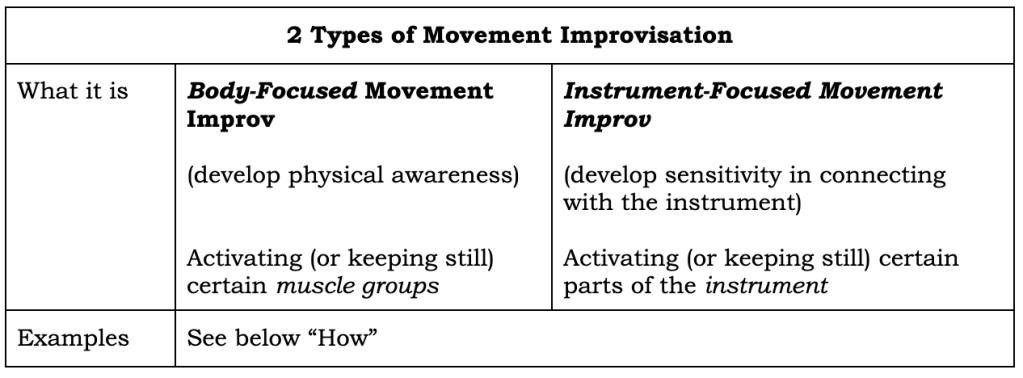
1. Movement Improvisation
Objective:
Simplify movement patterns & sharpen body awareness
What it looks like:
How:
- Identify the challenge: encourage students to verbalize what they hope to focus on & why
- Reset: When a certain area gets tense (e.g shoulders for string players), advise students to move that muscle up and down, front and back, in circles, etc., without their instruments to feel the natural position of the muscle, then keep the same relaxed position when they play with their instruments.
- Improvising in action
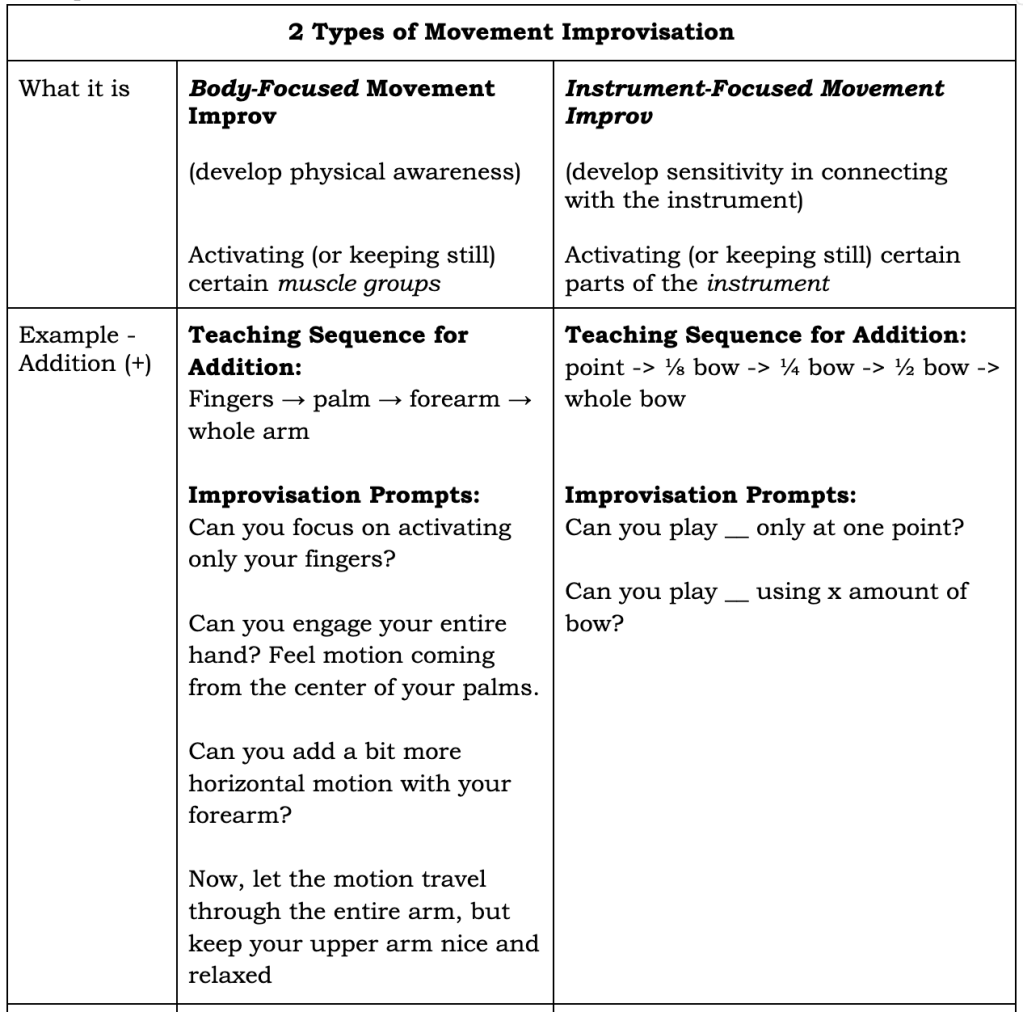
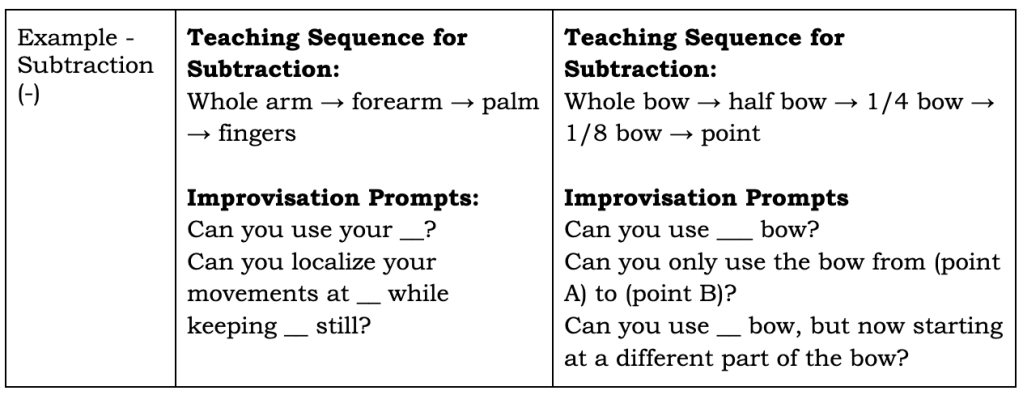
- Addition (+): start with small movements then gradually increase the range of motion, or
- Subtraction (-): start with big movements then gradually reduces motion
- Repeat step 1-3 as needed
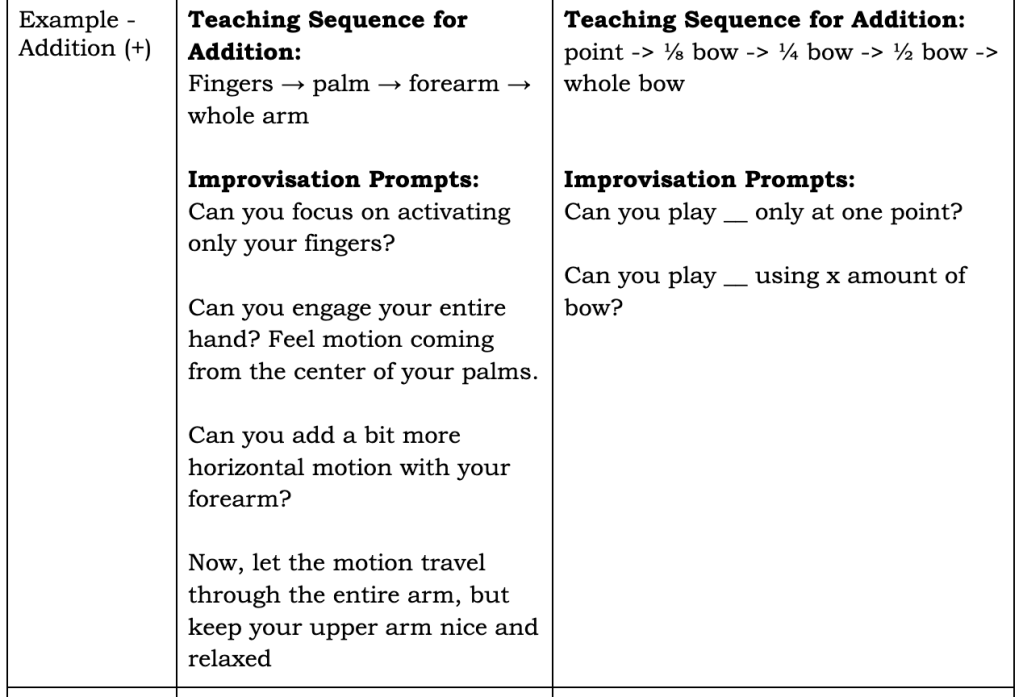
Example:
Tips:
- Doing several rounds of addition and subtraction will be very beneficial for students to expand their understanding of the tools they have to create good sound
- Teaching sequences:
- Add then Subtract: good for developing basic technique from ground up (e.g. spiccato)
- Subtract then add: good for breaking down complicated passages (or a complicated technique) from the repertoire
2. Rhythmic Improvisation
Objective:
Develop a steady pulse & coordinate movement
What it looks like:
- Identify a basic rhythm
- Create rhythmic variations
- Add rests → remove rests
How:
- Identify the challenge: encourage students to verbalize what they hope to focus on & why
- Set up a metronome (highly recommended): help students maintain a steady pulse
- Reset: choose a basic rhythmic idea that is comfortable to play (e.g. eighth notes)
- Improvising in Action
- Add (+): complicate rhythmic patterns, or
- Subtract (-): simplify rhythmic patterns
- Repeat step 1-4 as needed
Example:
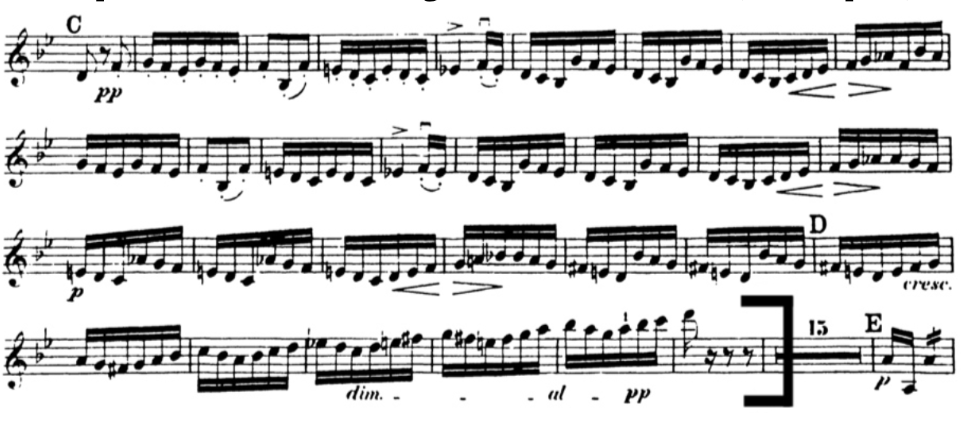
(An excerpt from Midsummer Night’s Dream – Scherzo, violin part, C-D)
Sample teaching sequence #1
- Identify the challenge: coordination between left and right hands
- Set up a metronome
- Reset: play as written
- Improvising in Action
- Change sixteenth notes into dotted rhythms
- Group each measure into 3+3; 2+2+2; 4+2, etc., add short rests in between (no metronome)
- Reset
Sample teaching sequence #2
- Identify the challenge: maintain a consistent pulse
- Set up a metronome
- Reset: play as written
- Improvising in Action
- For measures with only sixteenth notes, play only the first 4 notes of each measure
- For measures with only sixteenth notes, play the first note and last three notes of each measure
- For measures with only sixteenth notes, play the first note and last three notes of each measure
- For measures with only sixteenth notes, play only the first three notes of each measure
- Etc,.
- Reset
3. Accent Improvisation
Objective:
Organize the musical challenge into patterns
What it looks like:
How:
- Identify the challenge
- Set the metronome (highly recommended)
- Reset: play with no accents
- Improvising in Action
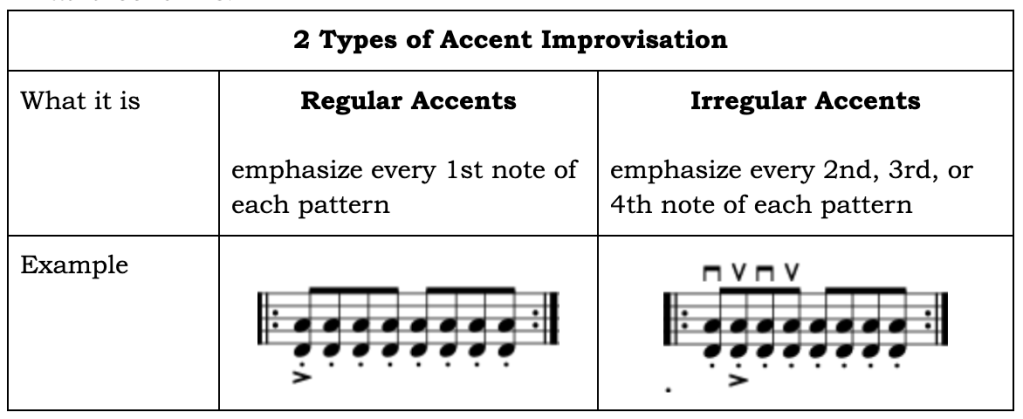
- Add (+): add accents, or
- Subtract (-): remove (some) accents
- Repeat 1-4 as needed
Example:
(An excerpt from Midsummer Night’s Dream – Scherzo, violin part, C-D)
Sample teaching sequence:
- Identify the challenge: maintain a consistent tone for string crossings
- Set the metronome:
=50 (under tempo)
- Reset: play on the string softly, no dynamics or accents; then, play the passage with spiccato
- Improvising in action:
- Add accent on every 1st note of each measure
- For the measures with all sixteenth notes, add accents on every 1st and 4th notes of each measure
- Reset
- For the measures with all sixteenth notes, add accent on every 2nd sixteenth note of each measure (play slower if needed)
- Reset
- For the measures with all sixteenth notes, add accent on every 4th note of each measure
- Reset; put metronome at a faster tempo & repeat improvising in action
- Play in written dynamics
4. Dynamics Improvisation
Objective:
Expand dynamic range & develop subtleties in playing
What it looks like:
How:
- Identify the challenge: encourage students to verbalize what they hope to focus on & why
- Set the metronome
- Reset: define a default dynamics that is comfortable to play
- Improvising in Action
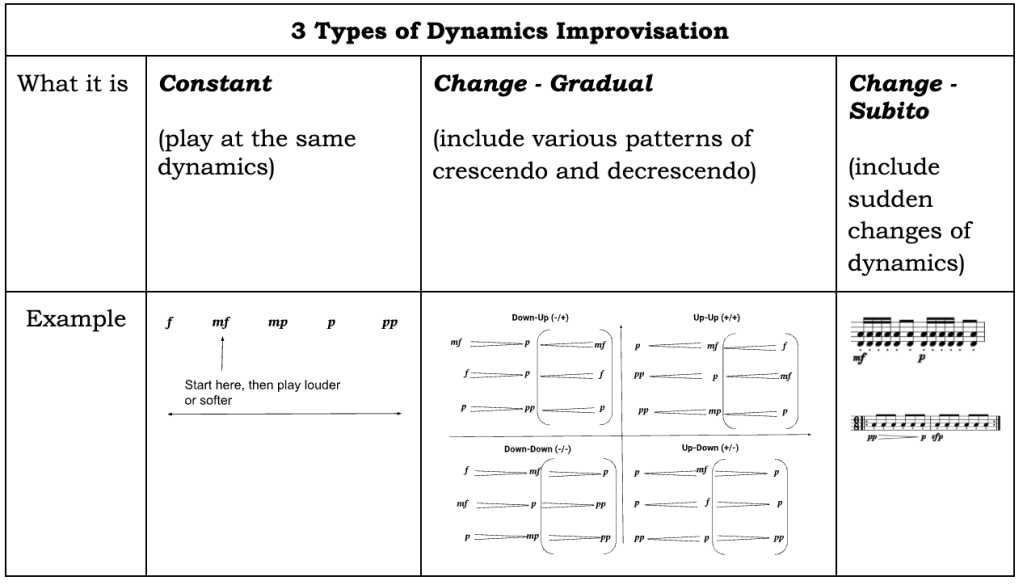
- Add (+): play louder, or complicate dynamic patterns
- Subtract (-): play softer, or simplify dynamic patterns
- Repeat step 1-4 as needed
Example:
(An excerpt from Midsummer Night’s Dream – Scherzo, violin part, C-D)
Sample teaching sequence:
- Identify the challenge: highlight the difference between playing p and pp for spiccato
- Set the metronome
- Reset: play sixteenth notes rhythm as written in the repertoire on an open string, mf
- Improvising in Action
- Ask students what they can change to create different dynamics (e.g., place on bow, bow angle, place in relation to fingerboard, arm weight, etc)
- Reset
- Play softer and softer
- Play louder and louder
- Ask students to identify the ideal dynamics for p and pp
- Practice transition between p and pp:
- Change – gradual
- Change – subito
- Play as written
Technique-based Improvisation in Short:
Improvisation helps students become better problem solvers and develop sensitivity in their playing. To try out an organic way of breaking down a technical challenge that engages students in the process, you can follow the examples of 1) movement improv; 2) rhythmic improv; 3) accent improv, and 4) dynamics improv.
Remember, you don’t have to be fluent in musical improv to be able to use improvisation to support your teaching practice. The key here is just about combining and recombining things that you already know to help students gain different perspectives of the same challenge.
 Project Improv